


Ready to Go Deeper?
At LegalEnglish4Lawyers.com, we don’t just define legal terms — we explore them through real documents, client scenarios, and clause-by-clause analysis.
Click here to see a quick view of all posts.
-
How Lawyers Can Speak Legal English More Clearly and Persuasively
Many lawyers who speak Legal English as a second language assume that strong advocacy in English depends on sounding polished, sophisticated, or nearly native. In practice, that is often the wrong target. Here are some tips to speak Legal English more clearly and persuasively.
A persuasive advocate does not win because every sentence is elegant. A persuasive advocate wins because the listener understands the point, trusts the speaker, and remembers the story.
For ESL lawyers, that is encouraging. You do not need perfect English to be effective in court, arbitration, negotiation, or client-facing advocacy. You need English that is clear, controlled, and persuasive.
The real goal is not perfection
Second-language speakers often put enormous pressure on themselves. They worry about accent, grammar, vocabulary, and pronunciation all at once. That pressure can produce a style of speaking that sounds tense, overly formal, or less natural than it needs to be.
But advocacy is not a language exam.
Judges, arbitrators, clients, and even jurors usually care far more about whether they can follow your reasoning than whether your English sounds native. If your message is organized, your tone is steady, and your words are direct, you are already doing much of what effective advocacy requires.
Simpler English is often stronger English
Many ESL lawyers learned English through textbooks, written documents, and formal legal materials. As a result, they may instinctively choose longer words or more elaborate phrasing because it feels more professional.
In oral advocacy, that instinct can work against you.
Simple English is often more persuasive because it is easier to hear, easier to process, and easier to remember. A short sentence with familiar words usually lands better than a complicated sentence packed with abstractions.
Compare these approaches:
“Counsel’s position lacks evidentiary support.”
and
“There is no evidence for that claim.”
Both communicate a similar point. The second is more direct. In spoken advocacy, directness matters.
Concrete language helps people understand
Listeners respond more easily to language they can picture. That is one reason concrete speech is so powerful in advocacy.
Instead of describing everything in abstract legal terms, describe events in a way that lets the listener see what happened.
Rather than saying:
“The premises presented a hazardous condition.”
you might say:
“The floor was wet, there was no warning sign, and my client slipped as soon as she stepped forward.”
The second version does more work. It creates a scene. It also makes your English easier to control because it follows a clear sequence of facts.
For ESL lawyers, this is a useful habit: when possible, replace abstraction with action.
Strong verbs do more than complicated phrases
One of the fastest ways to improve spoken advocacy is to choose better verbs.
Weak advocacy often hides inside heavy noun phrases:
“made a misrepresentation,”
“engaged in concealment,”
“was in violation,”
“effected a termination.”Stronger advocacy often sounds like this:
“lied,”
“hid,”
“violated,”
“fired.”That does not mean every legal concept should be reduced to plain speech in every setting. But when you are speaking aloud, strong verbs usually give your argument more force and clarity.
For ESL lawyers, this is especially helpful because a sentence built around a clear subject and a strong verb is easier to say with confidence.
Shorter spoken sentences are usually better
Written English can tolerate long sentences. Spoken English usually cannot.
Many lawyers draft arguments in writing and then try to say them exactly as written. The result is often dense, breathless, and difficult to follow. This is even harder for ESL speakers, who may be managing pronunciation and syntax in real time.
A better approach is to break ideas into short spoken units.
Instead of saying everything in one long sentence, try dividing the thought:
“The witness first denied seeing the defendant that evening. Later, he admitted that he had spoken with him earlier that night. That inconsistency matters.”
This kind of structure helps the listener. It also helps the speaker.
Shorter sentences reduce the risk of losing breath, losing your place, or weakening the end of the thought.
Do not sound weaker than your argument
Many second-language speakers use cautious introductory phrases because they want to sound respectful or because they are buying time to think.
That is understandable, but too much verbal softening can dilute the impact of an argument.
Phrases such as:
“I think,”
“I believe,”
“I would say,”
“I will try to show,”can make a point sound more tentative than it really is.
Advocacy often becomes stronger when the lawyer states supported points more directly:
“The record shows…”
“The contract says…”
“The timeline does not fit…”
“The witness changed his story…”This is not about becoming aggressive. It is about sounding aligned with your own argument.
Story structure helps second-language advocacy
A case becomes easier to explain when it is organized as a sequence of events rather than as a mass of legal conclusions.
That is one reason storytelling is so important in advocacy. Story structure gives both speaker and listener a map.
It answers:
- Who acted?
- What happened first?
- What happened next?
- Why does it matter?
- What conclusion follows?
For ESL lawyers, this structure is especially useful because it reduces linguistic overload. Instead of trying to produce highly compressed analytical language, you can guide the listener step by step.
For example:
“First, the company promised delivery by Friday. Then it missed the deadline. After that, it stopped responding. My client lost the deal.”
This is clear, chronological, and persuasive.
Your accent is not the main issue
Many ESL lawyers worry that their accent will undermine their credibility. Usually, that fear is overstated.
An accent does not usually prevent persuasion. What causes greater difficulty is often something else: speaking too quickly, flattening emphasis, dropping volume at the end of sentences, or using overly complex phrasing.
A lawyer with an accent can still be extremely persuasive if the message is structured well and delivered with control.
The goal is not to erase who you are. The goal is to become easy to follow.
That means paying attention to pacing, emphasis, and sentence shape. In many cases, those matter more than accent.
Emphasis matters
Not every word in a sentence deserves the same weight.
If you stress everything, the listener may struggle to find the real point. Effective speakers guide attention by leaning slightly on the most important words, especially key verbs and nouns.
Compare:
“The defendant changed the document.”
“The defendant changed the document.”
Each version directs attention differently.
For ESL lawyers, practicing emphasis can dramatically improve intelligibility. Even when pronunciation is imperfect, clear stress patterns help the listener understand what matters most.
A good exercise is to mark one or two important words in each sentence before practicing aloud.
Do not let the end of the sentence disappear
A common speaking problem, especially under stress, is losing energy at the end of the sentence.
The lawyer begins well, but the last few words fade away. Unfortunately, the ending of the sentence is often where the conclusion sits.
For example:
“That is why the timeline fails.”
“That is the contradiction.”
“That is the breach.”Those endings must arrive clearly.
ESL lawyers can improve this by practicing sentence endings deliberately. Read key lines aloud and make sure the final word remains audible, supported, and intentional.
Silence can make you sound stronger
Many lawyers are uncomfortable with silence. They fill every pause because they fear sounding uncertain.
In reality, a well-placed pause often makes a speaker sound more confident.
A pause gives the listener time to absorb a point. It also gives the speaker time to breathe, think, and transition. For second-language advocates, this can be invaluable.
Silence is not emptiness. It is part of delivery.
Instead of rushing from sentence to sentence, allow moments of space, especially before an important point and after a strong conclusion.
Breath supports advocacy
Breath is not just about relaxation. It also affects the quality of your speaking.
When lawyers rush, they often run out of breath, flatten their voice, and lose control of sentence endings. That problem can become more noticeable in a second language.
A calm breath before a key sentence improves clarity, stability, and rhythm. It also helps reduce the feeling of panic that can come from trying to think and speak under pressure.
For ESL lawyers, better breathing often leads to better pronunciation, better pacing, and better authority.
Credibility matters more than polish
Listeners do not need a lawyer to sound theatrical. They need the lawyer to sound credible.
Credibility comes from a combination of things:
- clear structure,
- direct language,
- steady pacing,
- visible command of the facts,
- and a manner that feels honest rather than artificial.
This is particularly important for ESL lawyers. You do not need to perform a version of English that is not truly yours. You do not need to imitate another advocate’s voice. You need to communicate with conviction and clarity in your own voice.
That is often more persuasive than trying to sound overly polished.
Practical ways ESL lawyers can improve quickly
A few habits can make a noticeable difference.
Before a hearing or argument, rewrite important points in plain spoken English. If a sentence sounds like writing, simplify it.
- Replace abstract nouns with actions where possible.
- Use shorter sentences.
- Mark the key words for emphasis.
- Practice aloud, not silently.
- Add pauses at transition points.
- Make sure sentence endings stay strong.
It is also useful to record yourself. Many advocates discover that what feels slow is actually normal, and what feels natural may sound rushed.
Final thought
Persuasive English is not the same as perfect English.
For lawyers who speak English as a second language, effective advocacy comes from clarity, structure, vivid language, controlled delivery, and credibility. Those are advocacy skills, not native-speaker privileges.
A strong advocate does not need to sound flawless. A strong advocate needs to be understood and believed.
That is a more realistic goal, and a more powerful one.
Disclaimer
This article is for educational and informational purposes only and may contain errors. It does not constitute legal advice or legal services.
-
Common Legal English Phrases For Meetings
Introduction
Legal meetings are often fast-paced, informal in tone, and full of expressions that never appear in contracts or case law. For non-native English-speaking lawyers, these moments can be more challenging than drafting or research. The difficulty is not legal knowledge, but understanding the spoken Legal and Business English that lawyers use in meetings, calls, and internal discussions.
This post highlights common Legal English phrases regularly used in meetings that non-native lawyers often misunderstand. These expressions are drawn from real conversations in law firms and in-house legal departments.
Legal English Phrases Commonly Used in Meetings
1. “Let’s take this offline”
This does not mean leaving the internet. It means continuing the discussion later, usually privately or outside the meeting.
Example:
“Let’s take this offline and discuss it after the call.”2. “We need alignment”
This does not refer to physical positioning. It means agreement or shared understanding among stakeholders.
Example:
“We need alignment between legal and the business before proceeding.”3. “Can you flag that issue?”
This does not involve a literal flag. It means drawing attention to a problem or risk.
Example:
“Please flag any compliance issues during your review.”4. “Let’s circle back”
This means returning to a topic later, not immediately.
Example:
“Let’s circle back to this once we have more information.”5. “We should table this”
In American English, this means postponing discussion. In British English, it can mean introducing a topic. Context matters.
Example:
“Let’s table this issue until the next meeting.”6. “That’s above my pay grade”
This does not refer to salary. It means the decision must be made by someone more senior.
Example:
“That question is above my pay grade. We need executive input.”7. “We need buy-in”
This does not involve purchasing. It means obtaining approval or support from key stakeholders.
Example:
“We need buy-in from senior management before moving forward.”8. “Let’s set that aside for now”
This means temporarily pausing discussion of an issue without rejecting it.
Example:
“Let’s set that aside for now and return to it after the review.”9. “What’s the ask?”
This refers to the specific request or action being sought.
Example:
“Before we proceed, what’s the ask from legal?”10. “We’re not there yet”
This means the issue is premature or not ready for decision.
Example:
“We’re not there yet on approving the settlement.”11. “This is a moving target”
This means the facts, requirements, or expectations keep changing.
Example:
“The regulatory guidance is a moving target right now.”12. “Let’s make sure we’re on the same page”
This means confirming that everyone has the same understanding.
Example:
“Let’s make sure we’re on the same page about the timeline.”13. “That’s helpful context”
This usually means the information helps frame the discussion, not that it changes the outcome.
Example:
“That’s helpful context for assessing liability.”14. “Can you walk us through this?”
This means explaining something step by step.
Example:
“Can you walk us through the proposed structure?”15. “From a legal perspective”
This signals that the speaker is separating legal risk from business considerations.
Example:
“From a legal perspective, this creates potential exposure.”16. “That raises a concern”
A polite way to signal risk without sounding confrontational.
Example:
“That raises a concern regarding data protection.”17. “We may need to escalate this”
This means involving more senior management or decision makers.
Example:
“We may need to escalate this to the general counsel.”18. “Can we narrow the scope?”
This means reducing the size or complexity of a request.
Example:
“Can we narrow the scope to focus only on the U.S. operations?”19. “Let’s confirm next steps”
This signals the end of discussion and focuses on action items.
Example:
“Before we close, let’s confirm next steps.”20. “We’ll need to think this through”
This does not mean refusal. It means further analysis is required.
Example:
“We’ll need to think this through before committing.”Why These Phrases Matter
Misunderstanding meeting language can lead to missed expectations, silence at critical moments, misaligned follow-up actions, or reduced professional credibility. For lawyers, meetings are where risk is framed, decisions are influenced, and trust is built. Understanding how these expressions function in real time helps ensure your legal expertise is clearly understood and properly valued.
Conclusion
Legal meetings rely heavily on informal but precise language. These phrases are rarely taught in textbooks, yet they appear daily in professional practice. For non-native English-speaking lawyers, learning how these expressions work in context is essential for effective participation, confidence, and influence in meetings.
Improve Your Spoken Legal English
At LegalEnglish4Lawyers.com, we work with lawyers, in-house counsel, and law students who want to strengthen their spoken Legal or Business English for real professional situations, including meetings, calls, interviews, or classroom discussions.
Lessons are taught by an experienced lawyer and Legal English teacher and focus on helping you:
- Understand and use spoken Legal English in meetings or internal discussions
- Navigate Business English commonly used in law firms or corporate environments
- Build confidence for client interactions, interviews, presentations, or law school participation
Whether you are already practicing law or preparing to enter the profession, targeted language training can help you communicate more clearly and confidently.
Ready to start? Book your personalized lesson at LegalEnglish4Lawyers.com.
Disclaimer
The content provided herein is for discussion and educational purposes only and may contain errors. The reader is responsible for confirming the accuracy of the information. This content does not constitute legal, professional, or language training advice. We disclaim any liability for any loss or damage incurred directly or indirectly from reliance on this material.
Other Legal English Posts
 Effective Communication
How Lawyers Can Speak Legal English More Clearly and Persuasively
Many lawyers who speak Legal English as a second language assume that strong advocacy in English dep…
 Legal English Vocabulary
Common Legal English Phrases For Meetings
Introduction Legal meetings are often fast-paced, informal in tone, and full of expressions that nev…
 Focus & Productivity
How Lawyers Can Use Breathwork To Reduce Stress and Improve Clarity and Focus
Introduction: Breathwork Affects Clarity, Focus and Stress. Controlled breathwork from the yogic tra…
 Legal English Vocabulary
25 Essential Contract Drafting Verbs Every Lawyer Should Know
Introduction: Contract drafting relies heavily on precise verbs, and choosing the right one can affe…
 Legal English Vocabulary
Legal English for Lawyers: 20 Real Phrases Lawyers Use to Talk About Their Cases
Introduction: This list of legal English phrases may seem somewhat random — and that’s because it is…
 Artificial Intelligence Key Words
How CEOs Are Talking About AI in the Workplace: 21 Key Terms Lawyers Should Know
Introduction: Artificial intelligence (AI) is transforming not only how businesses operate but also …
 Everyday English for Lawyers
27 Useful English Expressions for Lawyers in the Workplace
Strengthen Your Communication Inside and Outside the Office with 27 Useful English Expressions for L…
 Productivity
Reduce Stress After Work With the Powerful Technique of One-Pointedness (Ekāgratā)
Reduce stress, restore calm, and gain clarity after a busy day with one-pointedness (ekāgratā) as de…
 Legal English (General)
Mastering Legal English: 8 Strategies for Non-Native English-Speaking Lawyers and Law Students
Introduction. For lawyers and law students who speak English as a second language, developing fluenc…
 Phrasal Verbs
Legal English Phrasal Verbs – Part 2: 10 More Key Expressions Every Lawyer Must Know
Introduction. Legal professionals use phrasal verbs every day—often without even realizing it. Wheth…
 8 Part Litigation Series
Appeals and Enforcement – 8 Key Legal English Vocabulary Words – Litigation Vocabulary Series – Part 8
Introduction To Legal English for Appeals and Enforcement. The litigation process doesn’t always end…
 8 Part Litigation Series
Judgment and Remedies: 8 Key Legal English Words – Legal English Litigation Vocabulary Series – Part 7
Introduction To Judgment & Remedies. When a trial concludes, the court enters its decision—and t…
 8 Part Litigation Series
The Trial Stage Legal English Vocabulary – 8 Essential Litigation Vocabulary Terms- Part 6
Introduction To The Trial Stage. The trial is the culmination of months—or years—of litigation strat…
 8 Part Litigation Series
Pre-Trial Motions and Summary Judgment-Essential Litigation Vocabulary-Part 5
Introduction To Pre-Trial Motions and Summary Judgment. As litigation approaches trial, pre-trial mo…
 8 Part Litigation Series
Discovery Phase-Essential Litigation Vocabulary-Part 4
Introduction To The Discovery Phase. The discovery phase is often the longest and most complex part …
 8 Part Litigation Series
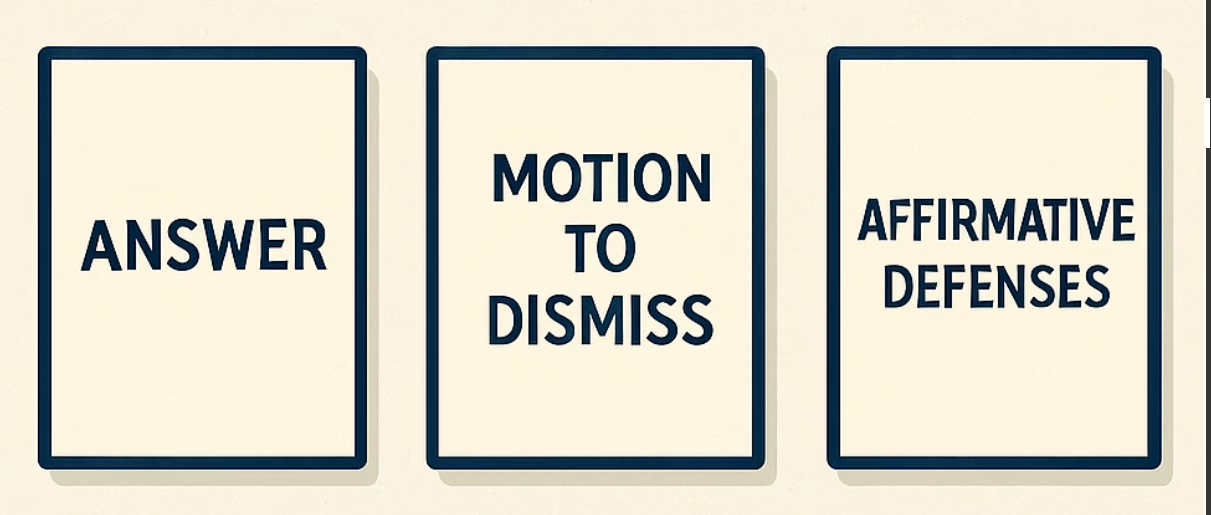
Defenses & Responsive Pleadings-Essential Litigation Vocabulary-Part 3
Introduction: Defenses & Responsive Pleadings After a lawsuit is filed, the defendant’s response…
 8 Part Litigation Series
Filing a Lawsuit-Essential Litigation Vocabulary-Part 2
Introduction Filing a lawsuit formally initiates a legal dispute and sets in motion the procedural a…
 8 Part Litigation Series
Pre-Litigation Stage-Essential Litigation Vocabulary-Part 1
Introduction Litigation doesn’t begin in the courtroom—it often starts long before a complaint is fi…
Legal English (General)10 Legal English Terms Every International Lawyer Should Know
Whether you’re drafting a contract, negotiating a deal, or advising clients across borders, here are…
Mergers & Acquisitions (M&A)17 Key Vocabulary Words for Mergers and Acquisitions
In this post, we’ll break down 17 key vocabulary words for mergers and acquisitions (M&A). These…
Trademarks12 Useful Trademark Vocabulary Words:
Understanding 12 Key Trademarks Terms. Trademarks play a crucial role in protecting brands and maint…
Phrasal VerbsLegal English Phrasal Verbs:
20 Essential Expressions for Lawyers. Phrasal verbs are a key part of English communication, and law…
StartupsVenture Capital Start Up Glossary: 22 Key Terms Every Startup Should Know
Navigating the world of venture capital (VC) can feel like learning a new language. Whether you are …
Artificial Intelligence Key WordsArtificial Intelligence Glossary (Part 3): 7 key vocabulary words and phrases to understand the new language around AI.
(Confabulation) – (AI Red-Teaming) – (Provenance Data Tracking) – (Cascading Impac…
Artificial Intelligence Key WordsArtificial Intelligence Glossary (Part 2): 9 key vocabulary words and phrases to understand the new language of AI.
(Dan “Do Anything Now”) – (Jailbreak) – (Safety Guardrail) – (AI-Boyfr…
Artificial Intelligence Key WordsArtificial Intelligence Key Words (Part 1): 13 key vocabulary words and phrases to understand the new language of AI.
(Throttle the Creation) – (Regurgitate Training Data) – (Open Source AI) – (Biden&…
TrademarksUS Supreme Court Limits Foreign Application of US Trademark Law
The Supreme Court, applying the presumption against extraterritoriality, clarified that the Lanham A…
-
How Lawyers Can Use Breathwork To Reduce Stress and Improve Clarity and Focus
Introduction: Breathwork Affects Clarity, Focus and Stress.
Controlled breathwork from the yogic tradition, known as प्राणायाम (prāṇāyāma), is emerging as a powerful non pharmacological tool for professionals seeking enhanced clarity, sustained focus, and improved stress management. This post explores the potential cognitive and physiological benefits associated with regulated breathing and outlines how the concept of प्राणायाम (prāṇāyāma) is established in the classical yoga texts. This post does not explain how to perform any techniques. Anyone interested in breathwork should learn from a qualified instructor.
Etymology: What प्राणायाम (prāṇāyāma) Means
The word प्राणायाम (prāṇāyāma) is traditionally broken into two components:
- प्राण (prāṇa): life force or vital energy. In the yogic view, prāṇa is the subtler energy that connects the physical body with the mind. It comes from the verbal root अन् (an), meaning “to breathe”.
- आयाम (āyāma): extension, regulation, or expansion.
Together, प्राण + आयाम yields प्राणायाम (prāṇāyāma), meaning the regulation, expansion, or intentional guidance of the breath and vital energy. This interpretation appears throughout traditional yoga commentaries and is referenced in the Yoga Sutra of Patañjali, where प्राणायाम (prāṇāyāma) is described as a bridge between physical steadiness आसन (āsana) and concentration धारणा (dhāraṇā).
Potential Benefits of Breathwork
Research on breath regulation continues to develop and results vary among individuals. However, early studies and widely discussed findings in academic and wellness literature suggest several potential benefits. These are not guaranteed outcomes but areas of interest frequently explored in scientific and therapeutic discussions.
Sharpened Focus and Cognitive Control
Breath regulation may activate the prefrontal cortex, which is associated with decision making, attention, and executive function. These cognitive domains are essential for legal analysis, negotiation, and strategy.
Enhanced Stress Resilience and Management
Slow and controlled breathing can influence the body’s stress response and may support a sense of calm during demanding situations such as hearings, client meetings, or complex drafting tasks.
Cultivating Emotional Balance and Composure
Some studies suggest that intentional breathing can help individuals stay composed when facing conflict, adversarial interactions, or high pressure deadlines. This may support a more balanced tone in communication.
Countering Mental Fatigue
Breath awareness practices may counter patterns of shallow breathing that contribute to mental exhaustion, which is relevant for professionals working long hours.
Supporting Rest and Sleep Quality
Some breath regulation practices may help quiet mental activity before bedtime. Individual results vary.
Releasing Muscular Tension and Improving Physical Ease
Breathwork may help reduce muscular tension in areas that commonly tighten during prolonged work such as the jaw, neck, and upper back.
प्राणायाम (prāṇāyāma) in the Yogic Tradition and Its Influence on the Mind
प्राणायाम (prāṇāyāma) is described in several key sutras in the Yoga Sutra of Patañjali, specifically in साधनपादः (Sādhana Pāda), Chapter Two, which focuses on practice and discipline.
Sādhana Pāda, Sutra II.49
तस्मिन् सति श्वासप्रश्वासयोर्गतिविच्छेदः प्राणायामः
tasmin sati śvāsa praśvāsa yoḥ gati vicchedaḥ prāṇāyāmaḥOnce steadiness in आसन (āsana) is established, प्राणायाम (prāṇāyāma) is the regulation or suspension of inhalation and exhalation. This describes प्राणायाम (prāṇāyāma) as intentional breath regulation that shifts attention inward.
Sādhana Pāda, Sutra II.50
बाह्याभ्यन्तरस्थम्भवृत्तिर्देशकालसंख्यानिभिः परिदृष्टो दीर्घसूक्ष्मः
bāhya abhyantara stambha vṛttiḥ deśa kāla saṅkhyānibhiḥ paridṛṣṭo dīrgha sūkṣmaḥKey Sanskrit Terms:
- देश (deśa): location
- काल (kāla): time or duration
- संख्या (saṅkhyā): count
प्राणायाम (prāṇāyāma) involves refining the breath so that it becomes long and subtle, extended in देश (deśa) space or location, काल (kāla) time, and संख्या (saṅkhyā) number. Here the text highlights qualities of refinement and steadiness rather than force.
Sādhana Pāda, Sutra II.53
धारणासु च योग्यता मनसः
dhāraṇāsu ca yogyatā manasaḥThrough प्राणायाम (prāṇāyāma), the mind becomes fit for concentration धारणा (dhāraṇā).
Grammar Note: योग्यता (yogyatā)
This feminine noun comes from the root युज् (yuj), meaning “to join”, combined with the तल् प्रत्यय (tal pratyaya), which forms abstract feminine nouns meaning “the state of being X”. Thus योग्यता (yogyatā) means “the state of being fit or ready”, indicating that प्राणायाम (prāṇāyāma) creates readiness for concentration rather than forcing it.This link between breath and clarity is one reason प्राणायाम (prāṇāyāma) is widely associated with improved focus, emotional balance, and steadiness under pressure, qualities relevant to the legal profession.
Conclusion
Although practice results vary widely among individuals, many people explore प्राणायाम (prāṇāyāma) for potential support in mental clarity, emotional steadiness, and stress regulation. Its foundational role in the Yoga Sutra of Patañjali highlights its purpose as a bridge between the body and the mind. Anyone interested in breathwork should learn these practices directly from a qualified instructor.
Medical Disclaimer
The information provided here is for educational and informational purposes only. It does not constitute medical advice, diagnosis, or treatment. Breathwork practices may not be appropriate for everyone. Always consult a qualified healthcare professional before beginning any new wellness, breathing, or mental health related practice.
More Posts to Improve Legal English
Effective CommunicationHow Lawyers Can Speak Legal English More Clearly and Persuasively
Many lawyers who speak Legal English as a second language assume that strong advocacy in English dep…
Legal English VocabularyCommon Legal English Phrases For Meetings
Introduction Legal meetings are often fast-paced, informal in tone, and full of expressions that nev…
Focus & ProductivityHow Lawyers Can Use Breathwork To Reduce Stress and Improve Clarity and Focus
Introduction: Breathwork Affects Clarity, Focus and Stress. Controlled breathwork from the yogic tra…
Legal English Vocabulary25 Essential Contract Drafting Verbs Every Lawyer Should Know
Introduction: Contract drafting relies heavily on precise verbs, and choosing the right one can affe…
Legal English VocabularyLegal English for Lawyers: 20 Real Phrases Lawyers Use to Talk About Their Cases
Introduction: This list of legal English phrases may seem somewhat random — and that’s because it is…
Artificial Intelligence Key WordsHow CEOs Are Talking About AI in the Workplace: 21 Key Terms Lawyers Should Know
Introduction: Artificial intelligence (AI) is transforming not only how businesses operate but also …
Everyday English for Lawyers27 Useful English Expressions for Lawyers in the Workplace
Strengthen Your Communication Inside and Outside the Office with 27 Useful English Expressions for L…
ProductivityReduce Stress After Work With the Powerful Technique of One-Pointedness (Ekāgratā)
Reduce stress, restore calm, and gain clarity after a busy day with one-pointedness (ekāgratā) as de…
Legal English (General)Mastering Legal English: 8 Strategies for Non-Native English-Speaking Lawyers and Law Students
Introduction. For lawyers and law students who speak English as a second language, developing fluenc…
Phrasal VerbsLegal English Phrasal Verbs – Part 2: 10 More Key Expressions Every Lawyer Must Know
Introduction. Legal professionals use phrasal verbs every day—often without even realizing it. Wheth…
8 Part Litigation SeriesAppeals and Enforcement – 8 Key Legal English Vocabulary Words – Litigation Vocabulary Series – Part 8
Introduction To Legal English for Appeals and Enforcement. The litigation process doesn’t always end…
8 Part Litigation SeriesJudgment and Remedies: 8 Key Legal English Words – Legal English Litigation Vocabulary Series – Part 7
Introduction To Judgment & Remedies. When a trial concludes, the court enters its decision—and t…
8 Part Litigation SeriesThe Trial Stage Legal English Vocabulary – 8 Essential Litigation Vocabulary Terms- Part 6
Introduction To The Trial Stage. The trial is the culmination of months—or years—of litigation strat…
8 Part Litigation SeriesPre-Trial Motions and Summary Judgment-Essential Litigation Vocabulary-Part 5
Introduction To Pre-Trial Motions and Summary Judgment. As litigation approaches trial, pre-trial mo…
8 Part Litigation SeriesDiscovery Phase-Essential Litigation Vocabulary-Part 4
Introduction To The Discovery Phase. The discovery phase is often the longest and most complex part …
8 Part Litigation SeriesDefenses & Responsive Pleadings-Essential Litigation Vocabulary-Part 3
Introduction: Defenses & Responsive Pleadings After a lawsuit is filed, the defendant’s response…
8 Part Litigation SeriesFiling a Lawsuit-Essential Litigation Vocabulary-Part 2
Introduction Filing a lawsuit formally initiates a legal dispute and sets in motion the procedural a…
8 Part Litigation SeriesPre-Litigation Stage-Essential Litigation Vocabulary-Part 1
Introduction Litigation doesn’t begin in the courtroom—it often starts long before a complaint is fi…
Legal English (General)10 Legal English Terms Every International Lawyer Should Know
Whether you’re drafting a contract, negotiating a deal, or advising clients across borders, here are…
Mergers & Acquisitions (M&A)17 Key Vocabulary Words for Mergers and Acquisitions
In this post, we’ll break down 17 key vocabulary words for mergers and acquisitions (M&A). These…
Trademarks12 Useful Trademark Vocabulary Words:
Understanding 12 Key Trademarks Terms. Trademarks play a crucial role in protecting brands and maint…
Phrasal VerbsLegal English Phrasal Verbs:
20 Essential Expressions for Lawyers. Phrasal verbs are a key part of English communication, and law…